How AI Could Drive Change Across Multiple Industries
As artificial intelligence’s impact extends beyond the tech sector, it broadens investors’ opportunity set.
Key Takeaways
The next wave of artificial intelligence (AI)-driven profit growth may come from companies that use the technology to innovate and streamline their operations.
Physical AI could expand the market for robotics by making machines more adaptable and easier for workers to operate.
AI may enable banks, drugmakers and autonomous-vehicle firms to achieve cost savings, accelerate development and unlock new growth.
The next phase of AI could reshape earnings growth across sectors — not just in tech — possibly creating new opportunities for institutional investors.
So far, AI’s impact has largely centered on the large hyperscalers that are investing hundreds of billions of dollars in AI models and infrastructure. Their spending has fueled significant demand for semiconductors, memory, cooling and construction.
However, companies across various sectors are starting to utilize AI for product innovation and enhancing operational efficiency. We see AI as a general-purpose technology, likely to be as ubiquitous as the internet is today.
Manufacturers are developing AI-driven automation and robotics that aim to be more adaptable and easier to deploy.
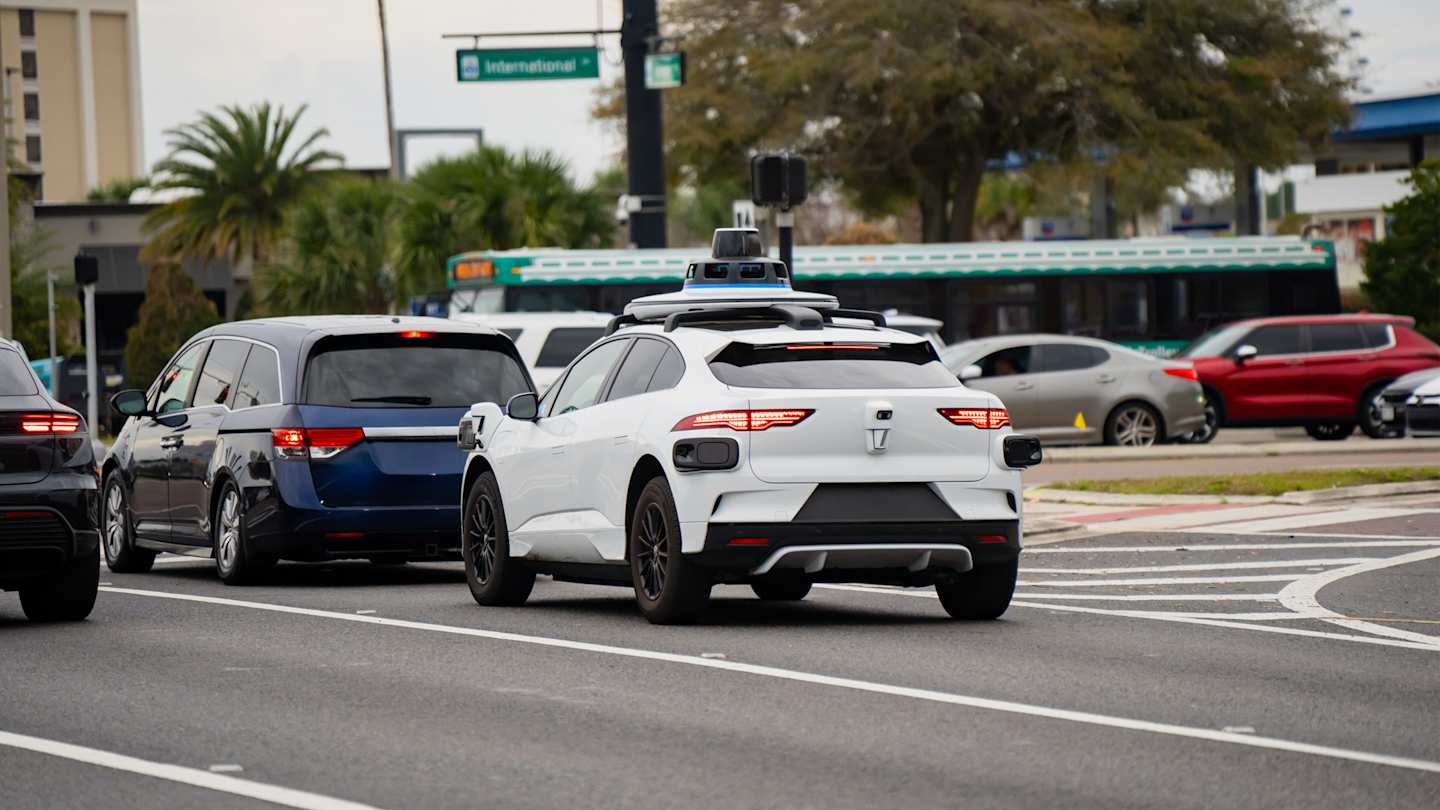
Self-driving taxis and trucks are transporting passengers and shipments at an early but accelerating stage of adoption.
Banks are automating document review, customer service and other tasks to streamline their back offices and reduce costs.
Pharmaceutical firms are working to accelerate the pace of drug development and testing with AI tools.
In our view, many of these new AI adopters are positioned for meaningful gains in profitability, productivity and market share. For asset owners, this shift expands the investable AI opportunity set beyond hyperscalers and their suppliers.
What Is Physical AI and How Could It Expand Robotics Adoption and Margins?
According to one industry survey, about 34% of manufacturing operations currently use AI, and respondents expect that figure to reach 54% by 2030.1
We think one of the biggest opportunities lies in physical AI, or AI embedded in robots and other forms of automation. Physical AI is designed to help bots adapt to changes in their environment, apply reasoning to unfamiliar problems and tackle a wider range of assignments.
For example, FANUC, a global leader in industrial robotics and automation, has partnered with NVIDIA to incorporate AI into its machines and expand its capabilities.2
This includes the ability to accept voice commands. Traditionally, industrial bots and automation required specialized programming to perform a limited set of highly specific tasks. With voice commands, essentially any worker could operate this equipment and even make changes on the fly without knowing how to write code.
Quality control has emerged as another popular AI use case for manufacturers. Companies like Keyence have developed AI-powered vision systems that automatically identify flaws in goods on production lines. Compared to earlier machine vision systems, these next-generation tools are designed to spot new types of problems, even if they haven’t been specifically trained to recognize them.
The goal is to prevent defective items from reaching customers, thereby reducing recalls and returns, without risking a slowdown in output.
In addition, AI-powered equipment constantly generates tremendous amounts of new data, allowing companies to continually refine their models. Rockwell Automation has cited this as a key advantage of its offerings.
“So, we are using that data to train our models, to be even more robust and effective, but it’s not available for anyone else to train.” — Aijana Zellner, Head of Investor Relations and Market Strategy, Rockwell Automation³
If AI enhances the capabilities and versatility of robotics and automation, these machines might become more appealing to manufacturers, expanding the market.
AI also promises to reduce the cost and complexity of deployment. According to one analysis, the firms that make these machines could see operating margins for advanced systems rise by 25%-30% or more.4
How Are Banks Using AI to Improve Productivity?
Some of the world’s largest banks use AI to automate labor-intensive tasks, including customer service, compliance verification and fraud detection.
Lloyds Banking Group, for example, is incorporating AI and machine learning across its operations:
About 93% of its workforce uses Copilot. According to one survey, employees save an average of 46 minutes per day.
Verifying a mortgage applicant’s income used to take days. A new tool cuts that time to just seconds.5
The company is rolling out an AI “financial assistant” that enables customers to receive financial coaching 24/7.
Banks offer excellent opportunities for AI innovation due to their extensive structured data and reliance on standardized, repeatable procedures for tasks such as loan underwriting and document review.
By automating these processes, banks hope to lock in substantial cost savings.
BNP Paribas says it has seen at least €600 million in benefits from AI use. Lloyds expects a £100 million boost to its P&L this year. As these efforts grow, the impact could reach into the billions.
Can AI Help Accelerate Drug Discovery and Development?
Drug development is essential for pharmaceutical companies, which must regularly update their product pipelines since their top-selling drugs will ultimately lose patent protection.
Unfortunately, the R&D process is often expensive, time-consuming and uncertain. Developing a new drug can take a decade, and only a fraction of treatments ultimately receive U.S. Food and Drug Administration approval.
Companies like AstraZeneca and Novo Nordisk are enhancing their R&D by integrating AI. They use it to pinpoint potential drug targets, analyze extensive datasets, and plan and refine clinical trials.
According to Boston Consulting Group (BCG), most of these initiatives remain in the pilot phase, although some are expanding for broader application.
BCG found that early adopters of AI have already realized substantial benefits. In some cases, early drug discovery and candidate identification have been reduced from four or five years to eight months. Clinical trials took 20% less time, and revenue was 5% to 15% higher.6
How Is AI Advancing Autonomous Vehicles?
After years of ambitious forecasts, more self-driving vehicles are appearing on city streets.
Waymo, Alphabet’s robotaxi service, now makes about 500,000 trips weekly in 11 cities. That’s roughly a tenfold increase since 2024.7 The company plans to expand to about 20 additional cities in 2026, including Tokyo and London.
Tesla and Amazon-owned Zoox also operate robotaxi services in the U.S., but on a smaller scale.
Meanwhile, autonomous trucking is gaining traction, particularly in the Southwest, as more companies adopt driverless trucks to transport goods. If successful, these efforts could lead to lower costs and more support for 24/7 operations.
While these use cases remain limited, we expect broader adoption over the next several years. One survey found that industry leaders expect robotaxis to be widely used by 2030. Autonomous trucking and privately owned self-driving could follow a few years later.8
Capturing Alpha by Identifying New AI Leaders
As AI adoption steadily increases across industries, the benefits will likely be unevenly distributed. Some companies will have the right mix of data, workflows, talent and discipline to turn AI into a real business advantage, while others will struggle.
Therefore, we favor a disciplined, active approach when seeking exposure to this emerging class of AI adopters. We believe analyzing individual companies’ fundamentals and growth drivers can help identify which firms are successfully implementing AI rather than simply talking about it.
In our view, the next phase of AI will be less about who builds it and more about who applies it best.
Authors
Senior Client Portfolio Manager
Explore Our Global Growth Equity Capabilities
Rockwell Automation, “State of Smart Manufacturing Report 2026.”
Fanuc, “FANUC Accelerates Physical AI in Industrial Robotics, Leveraging NVIDIA Technologies,” Press Release, March 16, 2026.
Rockwell Automation, Transcript – J.P. Morgan Industrials Conference, March 17, 2026.
UBS, “Fanuc: Reiterate Buy Given High Potential of AI Robots,” December 8, 2025.
Google Cloud, “Lloyds Banking Group Accelerates AI Innovation with Google Cloud,” PR Newswire, April 9, 2025.
Ashkan Afkhami, Priya Chandran, Ivan D’Avanzo, Camille Engel, Siwei He, Nigel Markey, and Chris Meier, “The AI-First Biopharma Company,” Boston Consulting Group, January 2, 2026.
Kirsten Korosec, “Waymo’s Skyrocketing Ridership in One Chart,” TechCrunch, March 27, 2026.
Ani Kelkar, Kersten Heineke and Martin Kellner with Charlotte Wiemuth and Eduardo Mañas-Pont, “Where to Next? Insights for Autonomous-Vehicle Experts,” McKinsey & Company, January 6, 2026.
References to specific securities are for illustrative purposes only and are not intended as recommendations to purchase or sell securities. Opinions and estimates offered constitute our judgment and, along with other portfolio data, are subject to change without notice.
Investment return and principal value of security investments will fluctuate. The value at the time of redemption may be more or less than the original cost. Past performance is no guarantee of future results.
Diversification does not assure a profit nor does it protect against loss of principal.
The opinions expressed are those of American Century Investments (or the portfolio manager) and are no guarantee of the future performance of any American Century Investments portfolio. This material has been prepared for educational purposes only. It is not intended to provide, and should not be relied upon for, investment, accounting, legal or tax advice.