The Venture Opportunity in Solving Real-World Problems
How do private investors evaluate promising start-ups? They consider whether the people, technology and market opportunity can support a scalable, enduring business.
Key Takeaways
A strong idea is only the beginning. Venture investors also consider whether a start-up has the team, technology and market opportunity to build a scalable, enduring business.
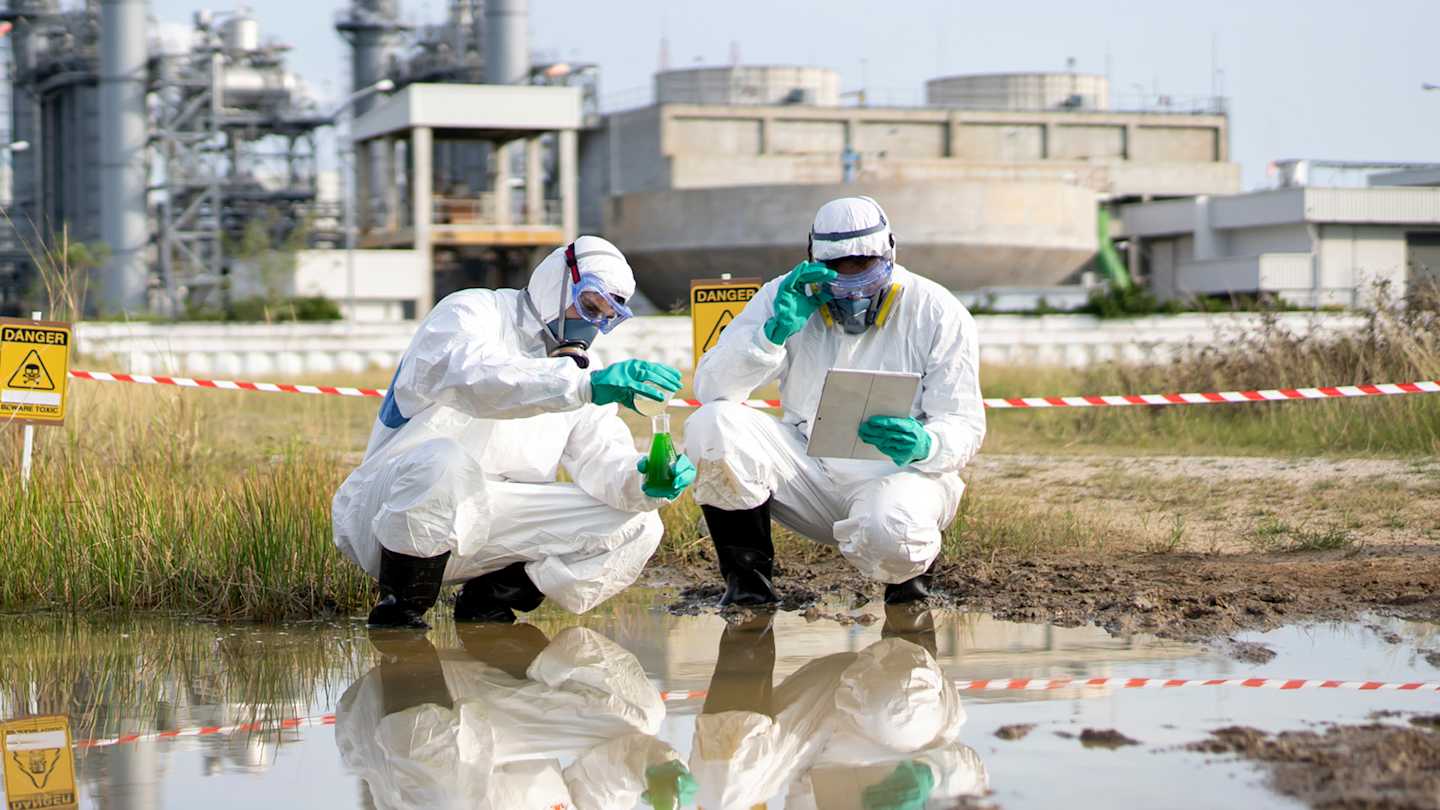
PFAS, or “forever chemicals,” bring this challenge to life. Many current methods filter or isolate these harmful substances rather than destroy them, and some forms may escape detection.
A new class of companies with innovative PFAS detection and destruction technologies illustrates how a promising idea can become a scalable, long-term solution to a real-world problem.
On a Mission
The American Century Private Investments team aims to invest in what the world needs within the sectors of health care and environmental innovation. With that in mind, it’s important to detail how this principle translates into real-world opportunities. As investors focused on advancing human well-being, we seek to identify companies within our target sectors with a focus on measurable impact, scalability, and long-term solutions.
In this article, we outline how we evaluate real-world solutions in practice and apply that framework to the challenge of addressing PFAS, or “forever chemicals.”
Getting Real: Evaluating Solutions in Practice
Through the lenses of people, technology and markets, audacious founders of start-ups seek to disrupt entrenched solutions to existing problems. Exceptional teams and differentiated technologies are important prerequisites for meaningful progress. Beyond these attributes, evaluating real-world solutions requires consideration of measurable outcomes, scalable impact, and long-term viability.
Solutions must have a significant societal impact. Solutions must enable impact at scale. And the approach must feasibly address the problems across market cycles.
The most pressing real-world problems require a focus on costs to society, including impacts on human well-being and the environment. The urgency of these issues informs the scale required to address them. Because capital availability, policy and company valuations inevitably fluctuate, the durability of solutions becomes increasingly important in diligence.
Real-World Problems in Focus: Addressing Forever Chemicals
Per- and polyfluoroalkyl substances (PFAS) are a class of compounds often referred to as “forever chemicals.” They contain some of the toughest chemical bonds to break. These compounds were first created in the mid-1900s, with early commercialization by household names such as Teflon™ and Scotchgard™.1 They quickly gained use across several industries, including consumer products, firefighting and automotive manufacturing. Their use enabled a variety of performance-enhancing advantages, including water repellency, fire suppression and engine efficiency.
However, these breakthroughs also imposed an unintended burden on society. Several PFAS compounds have been linked to serious health concerns, including cancer, reproductive issues, and developmental problems.2 Their toxicity and harmful effects have been known for decades, but broader public awareness has brought the problem to the forefront in recent years.3 Surveys by the Centers for Disease Control and Prevention found that most people in the U.S. have already been exposed to these compounds.4
The approach to these chemicals has seen a marked shift. Several brands and retailers have announced commitments and restrictions across cookware, food packaging materials, clothing, and furniture.5 Some of the world’s largest PFAS producers have also publicly committed to phasing out these chemicals, with support from investors.6 With billions of dollars awarded in PFAS water pollution settlements, stakeholders increasingly have an incentive to pursue proactive PFAS destruction to reduce long‑term liability exposure and address new regulatory requirements.7
Regulation has shifted from disclosure and downstream remediation toward verifiable accountability for the actual sources of PFAS. More specifically, evolving frameworks at the federal and state levels have elevated validated destruction while constraining legacy approaches such as long-term storage, incineration, and landfill transfer.8 There is still a need for solutions that remediate existing toxins and inhibit the creation of future PFAS-related issues.
Real-World Solutions for Taking the ‘Forever’ Out
Companies have turned to solutions such as activated carbon, filter membranes or incineration to address PFAS. More than 15,000 forms of PFAS exist. Yet only a small minority are subject to enforceable federal drinking water standards, with broader regulation occurring through self-reporting and state-level legislation.9 Perhaps a bigger challenge is detecting and destroying the often-overlooked short- and ultra-short-chain PFAS categories. These can appear as chemical inputs or byproducts and remain elusive to legacy remediation approaches.
As regulation, liability concerns and market expectations increasingly converge, PFAS solutions may need to address several technical requirements. These include detecting ultra-short-chain compounds, treating water continuously and destroying PFAS at a commercially scalable level.
A new class of companies is developing solutions for this challenge. One example is Claros Technologies, a firm that has created tools for PFAS detection and destruction. Without detection, verifiable PFAS destruction cannot occur. Without verifiable, continuous destruction, no reasonable scaling can occur. And without destruction at scale, no true solution exists for commercial or municipal applications. These facets are especially important in a market that is increasingly focused on the permanent elimination of PFAS rather than containment.
Solutions for What the World Needs
There is a persistent need for new and better solutions in health care and environmental technology. This represents both opportunity and risk, as failing to address these problems can have real-world consequences on the water we drink, the energy we rely on to warm our homes, the surgeries our families may undergo, or the medical devices on which we depend. Market bases have already been established. What remains is an ongoing need for scalable solutions.
This is the foundation of our capabilities and defines how we partner with innovative start-ups. It’s our job to work alongside these audacious founders, not only to build companies but to help scale solutions that matter.
Ambitious? Yes. Challenging? Absolutely. But these challenges also present opportunities to invest in what the world needs.
Authors
Managing Partner
Principal
Discover Our Approach to Private Investments
Amy Linn, “Toxic Timeline: A Brief History of PFAS,” Searchlight New Mexico, February 19, 2019.
U.S. Environmental Protection Agency, “Our Current Understanding of the Human Health and Environmental Risks of PFAS,” last updated July 14, 2026.
Jared Hayes and Scott Faber, “For Decades, Polluters Knew PFAS Chemicals Were Dangerous but Hid Risks from Public,” Environmental Working Group, August 28, 2019.
U.S. Environmental Protection Agency, “Our Current Understanding of the Human Health and Environmental Risks of PFAS,” last updated July 14, 2026.
Toxic-Free Future, “Retailers Committing to Phase Out PFAS as a Class in Food Packaging and Products,” April 2022.
ChemSec, “World’s Biggest Chemicals Group to Exit PFAS ‘Forever Chemicals,’” Press Release, November 26, 2025.
Chemours, “Chemours, DuPont and Corteva Reach Agreement with the State of New Jersey to Comprehensively Resolve All Environmental Claims Including PFAS,” Press Release, August 4, 2025; 3M, “3M Settlement with Public Water Suppliers to Address PFAS in Drinking Water Receives Final Court Approval, Press Release, April 1, 2024; Chemours, “Chemours, DuPont and Corteva Reach Comprehensive PFAS Settlement with U.S. Water Systems,” Press Release, June 2, 2023; Arkema, “Update on the PFAS Situation at the Arkema Site in Pierre-Bénite,” May 2026.
U.S. Department of War, “Detailed Analysis of Options for the Destruction and Disposal of Covered Materials Containing Per- and Polyfluoroalkyl Substances,” February 2026; U.S. Environmental Protection Agency, “EPA Expands Toxic Chemical Reporting, Strengthening Transparency on PFAS Pollution,” News Release, February 23, 2026; Safer States, “Expansive PFAS Protections Take Effect in 2026, as States Lead on Chemical Safety,” Press Release, February 18, 2026; Société Générale de Surveillance SA, “Canada Updates Toxic Substances Regulations,” January 2026.
National Conference of State Legislatures, “Per- and Polyfluoroalkyl Substances (PFAS) | State Legislation and Federal Action,” updated June 11, 2026.
No solicitation, offer, or distribution of any investment, security, financial instruments, or financial interest of any type is being made or is intended by any of this material. This material is provided for informational and educational purposes only.
Nothing herein constitutes a recommendation of any investment, security, financial instruments, financial interest of any type, or any investment strategy.
No representation or warranty is being made regarding the suitability of any investments, securities, financial instruments or strategies for any investor. The material on this site is provided “as is.” American Century does not warrant the accuracy of the materials provided herein, either expressly or impliedly, for any particular purpose and hereby expressly disclaims any warranties or merchantability or fitness for any particular purpose.
References to specific securities are for illustrative purposes only and are not intended as recommendations to purchase or sell securities. Opinions and estimates offered constitute our judgment and, along with other portfolio data, are subject to change without notice.
Investment return and principal value of security investments will fluctuate. The value at the time of redemption may be more or less than the original cost. Past performance is no guarantee of future results.
This material has been prepared for educational purposes only. It is not intended to provide, and should not be relied upon for, investment, accounting, legal or tax advice.