How Are Gas Prices Set? Your Guide to Understanding Prices at the Pump
The answer lies with crude oil, distribution and marketing, taxes and refining.
Key Takeaways
Why do gas prices rise? Several factors play a role, but it primarily comes down to oil prices, as crude oil makes up more than half of gasoline costs.
Conflicts that threaten the global oil supply can raise oil prices, in turn driving up gas prices.
The global market prices oil, which means that demand, output decisions, geopolitical risks and inventory levels all influence its value.
Gas prices can change quickly — sometimes because of local issues and sometimes because of events thousands of miles away. The recent U.S.-Iran conflict underscores how closely U.S. drivers are connected to the global oil market.
The good news: You don’t need to follow every oil market headline to understand what moves prices at the pump. The main drivers are fairly consistent: crude oil prices, refining costs, taxes, distribution and market expectations.
We’ll help you understand what sets gas prices, why they fluctuate and why Americans pay global oil prices even though the U.S. produces more oil than any other country.
How U.S. Gas Prices Are Set
In March, the average retail price per gallon for gasoline in the U.S. spiked, as shown in Figure 1. That's partly due to similar increases in crude oil prices, which rose as tensions disrupted supply in major oil-producing regions.
Figure 1 | Gas Prices Experienced Sharp Increases Beginning in March
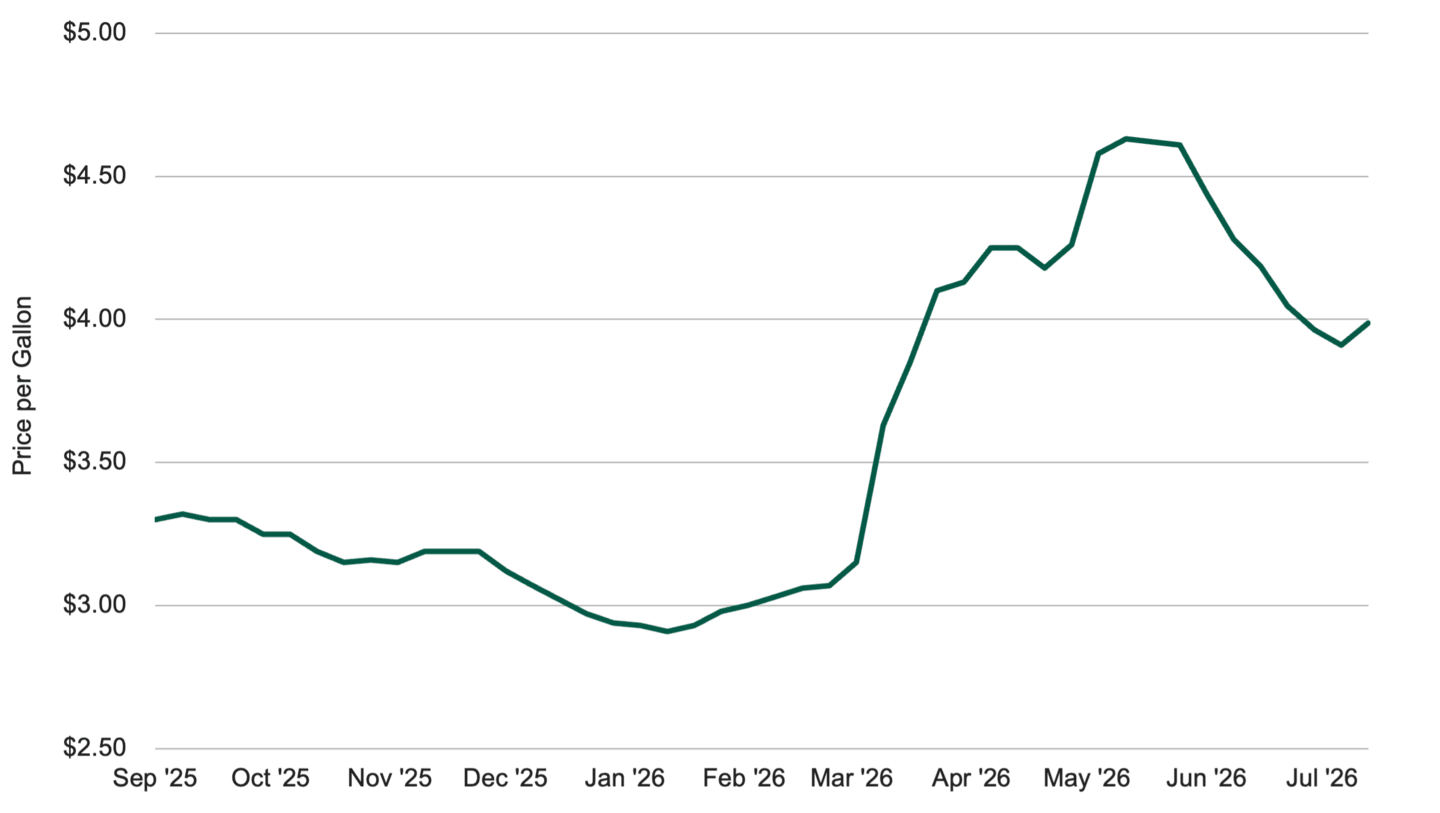
Data from 9/1/2025 - 6/22/2026. Source: U.S. Energy Information Administration (EIA). Price is the average retail price per gallon for U.S. regular gasoline, all formulations.
Gasoline starts as crude oil, which is usually the largest cost per gallon sold, as shown in Figure 2. When crude oil prices rise, gas prices often follow suit.
Taxes, refining costs and distribution also affect what drivers pay, which is why gas prices can vary by state even when oil prices are moving in the same direction. The federal tax on gas is 18.4 cents per gallon, while state taxes and fees averaged 33.55 cents per gallon as of January 2026.1
Figure 2 | Crude Oil Makes Up More Than Half of Your Gasoline Costs
Data as of 12/31/2025. Source: EIA. Note: Cost components are approximate and vary over time. Percentages reflect historical averages before the 2026 Strait of Hormuz crisis.
The cost of crude oil and refining tends to make up a higher percentage of what you pay when retail prices are higher.2
What Determines Gas Prices — And Why Do Prices Fluctuate?
It doesn’t come down to one single company or entity. The prices you see at the pump also reflect the profits and losses of refiners, marketers, distributors and the owners of retail stations.
There are around 148,000 fueling outlets across the U.S., most of which are owned by independent retailers rather than major oil companies.3 The cost — or expected cost — of upcoming fuel deliveries, labor and operating expenses, and transportation (included in the distribution and marketing component) can affect costs at individual stations.4
Refining costs and profits also cause prices to change seasonally. Gas prices tend to rise in the spring, peak in late summer and drop in the winter. That’s because specifications and formulations change based on the season. From 2004 to 2023, the price of regular-grade gasoline was about 40 cents higher in August than in January. Plus, the cost of ingredients blended into gasoline, such as fuel ethanol, may vary.
Why U.S. Drivers Pay Global Oil Prices
The U.S. produces more oil than any other nation, so it’s reasonable to wonder why conflict overseas can still raise prices at the pump here at home.
The short answer is that oil is bought and sold in a global market. A supply threat anywhere can affect prices everywhere, including in the U.S.
That means U.S. oil doesn’t get a special local price. Producers sell to buyers around the world, so global supply and demand drive prices, not just the location of oil production.
If conflict raises supply risk, oil markets react quickly. Brent crude and U.S. gasoline prices can rise if traders anticipate a tighter global supply.
When less oil moves through a key global shipping route, buyers compete for a smaller supply, and prices can rise everywhere.
U.S. production also doesn’t fully insulate Americans from global price swings, as the country still imports a significant amount of crude oil.
One reason is that much of the oil produced in the U.S. is lighter crude. Many Gulf Coast refineries were built years ago to process heavier crude from countries such as Canada, Mexico and Saudi Arabia.
As a result, the U.S. both exports some of its own crude and imports other types that better match existing refinery capacity.
In 2025, the U.S. imported 6.2 million barrels of crude oil per day, as shown in Figure 3.
Figure 3 | The U.S. Imports a Significant Amount of Crude
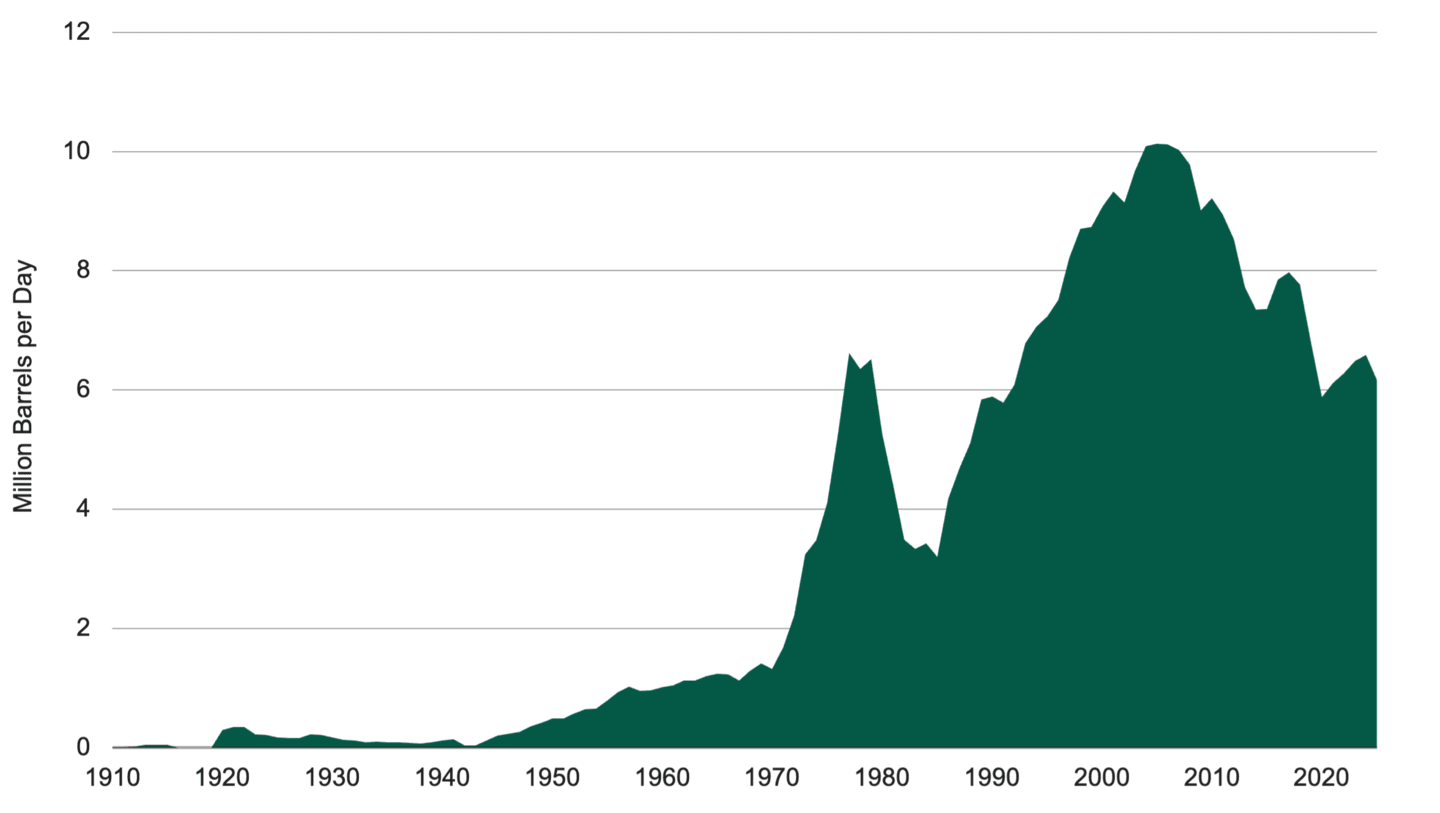
Data from 1/1/1910 - 12/31/2025. Source: EIA.
How Oil Prices Are Set
Most oil prices are anchored to global benchmarks, especially Brent crude and West Texas Intermediate (WTI).
Brent crude is the main global oil benchmark. Because it’s widely traded and easy to ship by sea, it’s used to price much of the oil traded around the world.
WTI is the main U.S. benchmark. It’s more directly influenced by domestic production, transportation and storage, but still tends to move with global events.
Oil prices often move before supply actually changes because traders react to what they think could happen next. Some of the biggest drivers are:
Global supply and demand. Prices tend to rise when oil demand exceeds producers' ability to supply it.
Organization of the Petroleum Exporting Countries (OPEC) production decisions. Output increases or cuts by major producers can quickly change expectations for global supply.
Geopolitical risk. Wars, sanctions and threats to major shipping routes can push prices higher even before supplies are disrupted.
Inventory levels. Stored oil can cushion short-term disruptions, so lower inventories often make markets more sensitive to risk.
The Bottom Line: Gas Prices Follow the Global Oil Market
The key point is simple: Even when oil is produced in the U.S., it’s priced in the global market. That’s why a disruption thousands of miles away can still show up in what you pay at the pump.
The next time gas prices increase, the cause may not be local. It may serve as a reminder of how closely U.S. fuel costs are linked to global oil supply, demand and risk.
Authors
Associate Client Portfolio Manager
Explore More Insights
Read our latest articles and market perspectives.
U.S. Energy Information Administration, “Factors Affecting Gasoline Prices,” accessed July 8, 2026.
Congressional Research Service, "Suspension of the Federal Gas Tax: In Brief," CRS Report R48948, May 15, 2026.
National Association of Convenience Stores, “Convenience Stores Sell the Most Gas,” June 19, 2026.
American Petroleum Institute, “How Gasoline Prices Are Determined,” April 15, 2026.
U.S. Energy Information Administration, “Gasoline Price Fluctuations,” September 6, 2024.
The opinions expressed are those of American Century Investments (or the portfolio manager) and are no guarantee of the future performance of any American Century Investments portfolio. This material has been prepared for educational purposes only. It is not intended to provide, and should not be relied upon for, investment, accounting, legal or tax advice.